Running the Green Square Track: The Weekend Warrior’s Guide to Preventing Seasonal Overuse Injuries
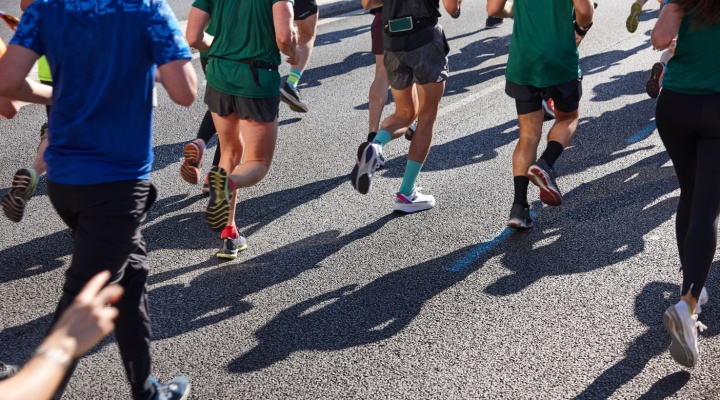
With the clearing of seasonal weather across Sydney’s inner east and south, local running routes through Alexandria, Mascot and Waterloo experience a significant influx of recreational runners. While increasing cardiovascular exercise provides clear physiological benefits, a rapid escalation in running volume or an abrupt alteration in training surfaces often leads to a predictable surge in musculoskeletal overuse injuries.
Understanding the biomechanical variables of outdoor running is essential for maintaining tissue health and avoiding training interruptions.
-
The Kinetic Impact of Surface Transitions
A primary catalyst for early-season injuries is the sudden shift from compliant indoor training surfaces to non-yielding outdoor environments.
- Ground Reaction Forces (GRF): Modern treadmills feature integrated shock-absorption decks that damp impact forces. Conversely, the concrete footpaths and asphalt roads traversing Green Square offer zero structural deflection.
- Tissue Stress: Switching abruptly to hard concrete significantly increases the peak ground reaction forces transmitted up the kinetic chain. Without a managed transition, this repetitive loading exceeds the remodelling capacity of local tissues, manifesting as medial tibial stress syndrome (shin splints), patellofemoral pain syndrome (runner’s knee), or Achilles tendinopathy.
-
Differentiating Delayed-Onset Muscle Soreness from Overuse Pathology
Sustaining a consistent training routine requires the ability to distinguish benign physiological adaptation from structural microtrauma.
- Delayed-Onset Muscle Soreness (DOMS): Normal post-workout soreness typically presents as a diffuse, bilateral muscular ache 24 to 48 hours post-exercise. It dissipates with light movement and does not alter basic gait mechanics.
- Overuse Injuries: Pathological tissue strain typically presents as localised, unilateral pain that is sharp or throbbing. If pain persists during initial warm-ups, focal tenderness occurs upon touching a bone or tendon, or local swelling develops around a joint, structural tissue damage is likely present.
-
The Role of Biomechanical Assessments
Running injuries are rarely isolated occurrences; they are usually the result of underlying structural imbalances interacting with repetitive stress.
- Gait Analysis: A professional biomechanical assessment evaluates specific structural parameters, including foot pronation velocity, pelvic drop, cadence and vertical oscillation.
- Targeted Interventions: Identifying these functional deficits allows for targeted interventions, such as adjusting stride frequency or prescribing specific eccentric strengthening protocols for the calves and gluteal muscle groups to enhance force absorption.
Clinical Guidance for Inner-South Runners
For recreational runners across the Green Square precinct navigating local footpaths, injury prevention relies on structured progression and accurate biomechanical alignment. Body Active Physio offers targeted diagnostic care and specialised running biomechanical assessments for athletes in Alexandria, Mascot and Waterloo. Identifying structural vulnerabilities early and managing the transition to outdoor running surfaces allows weekend warriors to improve cardiovascular endurance while protecting bone, joint and tendon integrity.