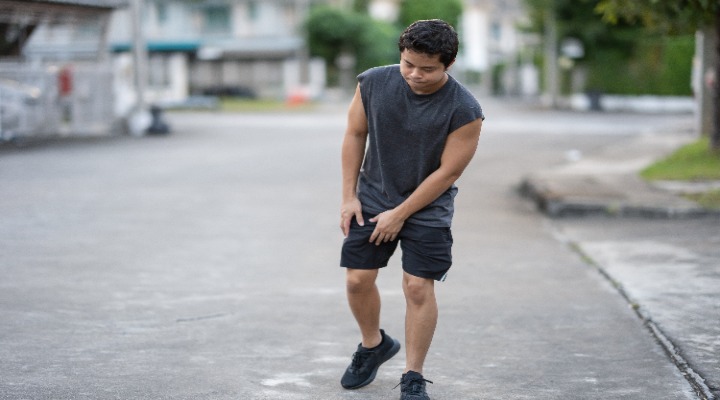
Training for the Sydney Half Marathon? How to Spot the Difference Between Running Soreness and an Incipient Tendinopathy
As training loads intensify for upcoming road races and local multi-sport events, managing physical recovery becomes critical for endurance athletes. Differentiating between benign post-exercise discomfort and early-stage structural soft-tissue issues is vital for preventing prolonged training interruptions. For recreational runners and triathletes, misinterpreting the early indicators of a tendinopathy can lead to structural degradation, potentially jeopardising race day participation.
The Pathological Divide: DOMS vs. Tendinopathy
Understanding the underlying physiological mechanisms of training discomfort allows athletes to monitor their recovery objectively and adapt their training programs effectively.
Delayed-Onset Muscle Soreness (DOMS)
DOMS represents a transient muscular response to micro-tears induced by unfamiliar or eccentric physical workloads.
- Onset and Duration: Discomfort typically peaks between 24 and 72 hours post-exercise and resolves spontaneously within a few days.
- Location: The sensation is diffuse, presenting as generalised stiffness or tenderness throughout the muscle belly (e.g., mid-calf or quadriceps).
- Response to Load: The discomfort typically diminishes during low-intensity movement or warm-up protocols, allowing for normal biomechanical function.
Incipient Tendinopathy
In contrast, a tendinopathy is a degenerative or failed healing response within the tendon matrix, commonly affecting the Achilles or patellar tendons due to repetitive mechanical overloading.
- Onset and Localisation: Pain is highly localised to the tendon structure or its bony insertion point. It frequently manifests as significant morning stiffness that presents independently of recent training sessions.
- The “Warm-Up” Illusion: Early-stage tendinopathy pain may diminish or “warm up” during a run, only to return with increased severity several hours after the session or the following morning.
- Palpation Sensitivity: The affected tendon structure often feels thickened, nodular, or acutely tender to direct pressure.
Modern Clinical Framework for Early Tendon Management
If an incipient tendinopathy is suspected, historical protocols based on complete rest and prolonged ice application are no longer recommended. Modern sports physiotherapy emphasises active, structured load management to maintain tendon capacity without aggravating the pathological tissue.
- Initial Load Management (Phase 1): Complete rest reduces a tendon’s capacity to handle load, accelerating tissue deconditioning. Instead, training volume and high-velocity running sessions are reduced to a tolerable baseline. High-impact energy-storage loads are temporarily replaced with targeted isometric holds (e.g., isometric calf raises) to provide immediate, transient pain relief and maintain baseline muscle activation.
- Progressive Heavy Slow Resistance (Phase 2): As irritability decreases, the tendon is systematically loaded using slow, controlled, high-resistance exercises. This mechanical strain stimulates collagen remodelling and improves the load-bearing capacity of the healthy portions of the tendon.
- Biomechanical Calibration: Concurrently, running mechanics are evaluated to identify underlying drivers of regional overload, such as an inadequate stride frequency (cadence) or poor proximal hip stability.
Maintaining a continuous training cycle requires an accurate assessment of physical symptoms. Addressing localised tendon changes early with structured load modification helps runners manage their symptoms effectively, ensuring they can line up on the race start line with optimal physical function.